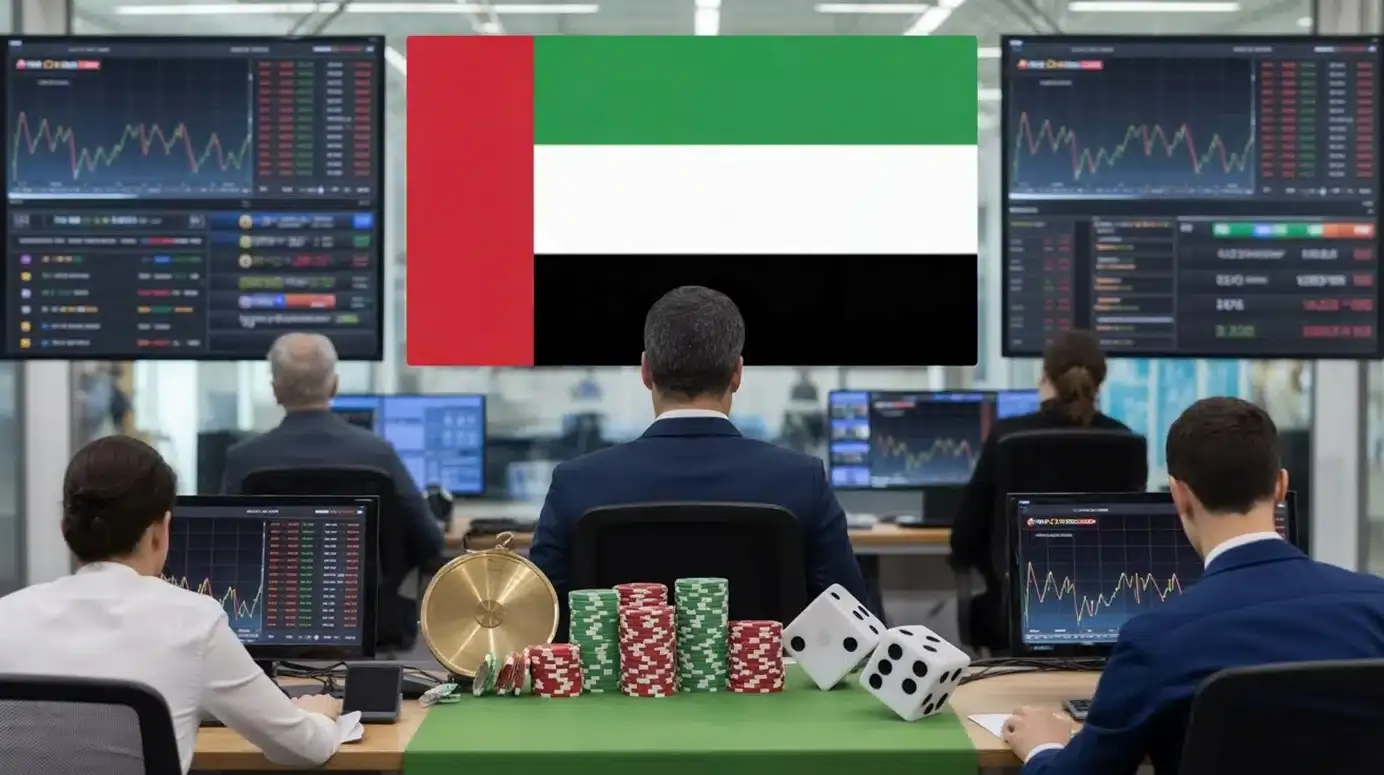
While traditional online casinos continue to dominate the Middle East gambling market, a different type of platform is quietly gaining traction among players. Prediction markets, where users bet on real-world events rather than card games or slots, saw trading volumes spike by 400% in 2024, according to platform data.
We spent three months testing these platforms with real money to understand why gamblers are suddenly interested in betting on elections instead of roulette wheels. What we found sits somewhere between sports betting and stock trading, but doesn’t quite match either.
What’s Drawing Players Away From Traditional Gambling
Prediction markets let you bet on real-world events before they happen. Will Bitcoin hit $150K by December? Will a certain company announce layoffs? Which country wins the next World Cup?
The mechanics are straightforward: You buy “shares” in an outcome you think will happen. If Bitcoin is trading at 65 cents per share for “Yes, it hits $150K,” you’re betting against people who think it won’t. When the event resolves, correct predictions pay $1 per share. Wrong ones pay nothing.
Prices move based on collective sentiment. Major news breaks, and that 65-cent share might jump to 85 cents. You can sell them and take a profit without waiting for the outcome. Or hold and hope you’re right.
Industry analysts point to this flexibility as a key differentiator. “Online casino games have fixed house edges,” notes one platform representative. “Prediction markets pit user knowledge against crowd opinion, not against programmed odds.”
Why This Operates Differently Than Casino Gambling
The house edge works differently here. Online casinos set the odds, and the math eventually grinds players down. That’s the business model.
Prediction markets don’t operate the same way. You’re betting against other people’s opinions, not against a casino’s programmed advantage. Platforms take a small fee when you trade (usually 2-5%), but they don’t care which side wins.
Research and knowledge actually change your odds here. Market data shows that informed traders consistently outperform casual bettors in political and financial markets, something impossible in slots or roulette, where the RTP remains constant regardless of player expertise.
The crowd sets prices through buying and selling. When thousands of people think an outcome is likely, the price goes up. Sentiment shifts, prices drop. You’re playing against collective opinion, and market historians point to several major events where the crowd was demonstrably wrong.
What’s Actually Trading Right Now
Our testing covered markets across five platforms over three months. Here’s where volume concentrates:
Political Events Lead Volume: US presidential races, European leadership changes, and Middle East political shifts drove the most activity. The 2024 Trump election markets moved an estimated $3.2 billion across platforms, according to blockchain data. Early position-takers who bought “Yes” shares when prices sat below 50 cents saw returns exceeding 100% as election day approached.
Cryptocurrency Markets Stay Active. Bitcoin price predictions, Ethereum milestone dates, and new coin launches generate constant trading. These markets are particularly volatile – our testing showed losses of USD 800 on an Ethereum prediction that didn’t materialize, offset by USD 1,200 gains on a Bitcoin rally that did.
Corporate Events Draw Interest: CEO changes, merger announcements, product launch dates, and earnings surprises attract serious capital. Tech company markets are getting particularly active as major firms navigate AI development and regulatory challenges.
Sports Futures Gain Traction. Unlike traditional sportsbooks, prediction markets focus on season outcomes and championship winners. The key difference is position trading – users can exit before resolution rather than locking in a bet.
Platform Realities and Regulatory Questions
Legal Status Remains Unclear. Gambling laws don’t specifically address prediction markets. Most platforms operate offshore with no explicit legal framework covering their use. Legal experts caution that users accessing these platforms do so without local regulatory protection.
Crypto Creates Barriers and Benefits. Major prediction markets run on cryptocurrency infrastructure. Users need USDC, ETH, or other stablecoins to participate. This creates setup friction – wallets, blockchain transactions, network fees – but also enables fast settlements that traditional banking can’t match.
Liquidity Varies by Market. Popular events maintain deep order books with tight spreads. Niche predictions struggle for participants. Our testing revealed positions stuck on smaller markets where bid-ask spreads exceeded 20% because of insufficient trading activity.
Time Horizons Test Patience Resolution can take weeks, months, or years, depending on the event. Our testing tied up USD 2,000 across various markets for four months. That’s capital locked away from other uses.
Knowledge Requirements Are Real. Market data shows consistent patterns: informed traders profit, casual bettors lose. Our testing confirmed this on tech sector predictions, where we overestimated our expertise.
Where Players Are Trading
Polymarket Dominates Volume. The largest prediction market platform runs onthe Polygon blockchain using USDC. Our testing found clean interfaces and deep liquidity on major markets. Minimum trades start around $10, but fee structures favor larger positions. access works through standard internet connections. Crypto wallet withdrawals processed smoothly in our tests.
Kalshi Brings US Regulation As a CFTC-regulated platform, Kalshi offers unusual legitimacy for the space. Markets cover economic data, weather events, and awards shows. Access from works, but payment methods primarily target US customers with domestic bank accounts.
Manifold Markets Serves Testing, starting with play-money markets. Manifold now offers real-money trading. The play-money side provides useful practice without capital risk. Real-money markets remain smaller with limited liquidity.
Who Profits and Who Doesn’t
Three months of testing with approximately USD 8,500 in positions across platforms yielded USD 1,100 in returns – a 13% gain that required constant monitoring and favorable timing on several major bets.
Trader Profiles That Show Returns: Users already tracking news and analysis daily. Political wonks and crypto market followers have research habits that translate directly to informed position-taking. Participants are comfortable with extended time horizons. Quick action seekers struggle with the days or weeks between significant price movements. Those with trading platform experience find the mechanics natural.
Where Participants Lose Money: Seeking casino-style action. Prediction markets move slowly compared to online slots or table games. Multiple positions in our testing sat unchanged for weeks. Betting on unfamiliar topics puts you against informed traders on the other side. Expecting calculable odds when your edge depends on being smarter than average.
Performance Comparisons: Sports betting offers more frequent opportunities but less position flexibility. Casino games require no research but offer no skill advantage. Poker involves similar skill elements but operates on shorter timeframes.
What Comes Next
Prediction markets aren’t replacing casinos. They’re carving out their own space – part trading, part betting, part opinion marketplace.
Our three-month test showed profits, but luck mattered more than we’d like to admit. The careful analysis, bets? About 50-50 win rate, which means losing money after fees.
Platform performance was solid. Money moved in and out without problems. Prices are updated fairly based on trading activity.
Analysts expect growth as crypto adoption spreads and major world events keep driving interest. The big question mark is regulation – clear legal frameworks could either legitimize these platforms or shut down access.
Bottom line: If you’re already tracking news obsessively, prediction markets let you put money on your opinions. Want casino thrills or a steady income? Look elsewhere. The platforms work fine. Whether they work for you depends on how honest you are about what you actually know versus what you think you know.
Curious if Kalshi works? We tested it (spoiler: it’s blocked). See our prediction markets platforms that actually accept players, including Polymarket and Manifold.